Storm damage is often treated as unavoidable. While you can’t control wind or rainfall, you can control how vulnerable your property is when storms arrive—and how quickly it recovers afterward.
For HOAs and commercial properties, storm preparedness is not just about landscaping aesthetics. It’s about safety, liability, operational continuity, and cost control. A property that is prepared experiences fewer hazards, less debris accumulation, fewer plant losses, and faster restoration. A property that is unprepared often faces emergency spending, resident complaints, blocked access, and avoidable damage.
This guide outlines what storm preparedness should look like for managed properties in Florida, and the steps that matter most before and after a storm.
Why Storm Preparedness Matters (Beyond Appearance)
Storm preparedness reduces four major risks:
1) Safety risk
-
-
falling limbs
-
-
hanging branches
-
blocked walkways and entrances
-
slick areas from pooling water
-
debris hazards around amenities and parking areas
2) Liability risk
When hazards exist on common areas, the property’s exposure increases.
3) Cost risk
Reactive cleanup and emergency repairs cost more than planned mitigation.
4) Operational disruption
Blocked entrances, inaccessible amenities, and damaged common areas create a “crisis mode” environment for managers and boards.
Preparedness reduces all four.
The Biggest Storm Damage Drivers in Landscapes
Most storm-related landscape damage comes from predictable failure points:
-
weak or overgrown tree limbs
-
deadwood left in the canopy
-
loose debris stored or left in landscape areas
-
clogged drainage zones and standing water areas
-
turf and bed erosion where runoff is unmanaged
-
irrigation components exposed and vulnerable
Preparedness is the process of removing these predictable failure points.
BEFORE THE STORM: A Practical Preparedness Checklist
1) Tree Risk Assessment and Pruning
Trees are typically the largest source of storm damage.
The goal is not to “cut everything back.” The goal is to:
-
remove deadwood
-
reduce weak limb risk
-
improve canopy balance
-
ensure clearance away from roofs, walkways, and parking
-
prioritize high-risk trees in high-traffic areas
High-priority zones:
-
entrances and main roads
-
sidewalks and amenity paths
-
parking lots
-
buildings and rooflines
-
playgrounds and community gathering zones
A proactive pruning cycle is one of the most cost-effective storm mitigation strategies.
2) Remove Loose Debris and Secure the Site
Storm damage is often amplified by what’s already on the ground:
-
dead branches
-
palm fronds
-
landscape waste
-
unsecured materials near beds and walkways
A clean property is a safer property during storms. Routine debris removal reduces flying hazard risk and prevents clogging drainage points.
3) Drainage and Runoff Readiness
Water-related damage often looks “minor” at first, but it creates long-term decline.
Before storms, check:
-
drainage inlets near common areas
-
areas that historically pool water
-
downspout discharge zones
-
slopes that show erosion patterns
-
mulch washout zones in beds
Preparedness means ensuring water has a path and isn’t being forced into landscape areas where it will destabilize soil and roots.
4) Irrigation System Protection (and Post-Storm Readiness)
Irrigation is often overlooked in storm planning.
Key preventative steps:
-
inspect valve boxes and ensure lids are secured
-
ensure heads aren’t loose or exposed
-
confirm controllers are protected from water intrusion
-
check for existing leaks (storms make them worse)
Even if you don’t “shut down” the system, having it stable prevents post-storm failures and reduces wasted water in already saturated soil.
5) Prioritize Visibility and Access
During storms and after storms, entrances and roads need to remain as accessible as possible.
Preparedness includes:
-
trimming and clearance for visibility at intersections
-
maintaining clean lines around entry monuments and signage
-
ensuring medians don’t create sightline hazards during heavy rain
The “Storm Readiness Plan” HOAs Should Have
A professional storm readiness plan includes:
-
pre-storm mitigation schedule (trees, drainage, cleanup)
-
property map of priorities (entrances, amenities, high-traffic zones)
-
post-storm triage workflow (what gets addressed first)
-
communication plan between vendor, manager, and board
-
documentation of risks addressed and recommendations pending
When storms hit, the plan prevents confusion and reduces reaction time.
AFTER THE STORM: Recovery That’s Fast and Controlled
After a storm, it’s tempting to focus only on appearance. The right approach is:
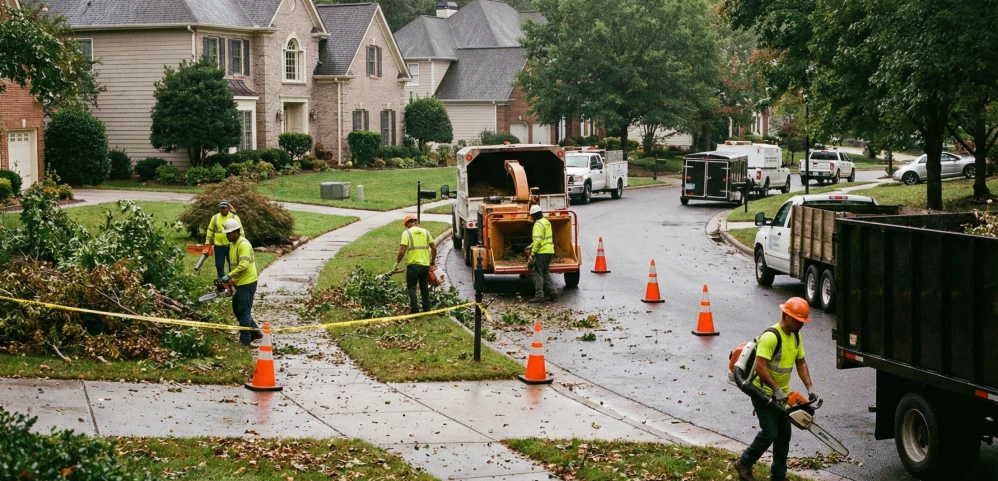
Step 1: Safety First
Immediately identify and remove hazards:
-
hanging branches
-
fallen limbs near walkways
-
blocked entrances
-
debris near parking and common zones
-
unstable trees that may fail next
This is the phase that reduces liability.
Step 2: Restore Access and Cleanliness
Once safety hazards are addressed, focus on:
-
clearing main roads and entrances
-
removing debris from sidewalks and amenity paths
-
cleaning gathering areas (clubhouse, pool, playgrounds)
Access and cleanliness reduce resident friction quickly.
Step 3: Stabilize the Landscape
Now address:
-
damaged plants and uprooted shrubs
-
washouts and exposed roots
-
bed displacement and mulch loss
-
erosion points
This prevents damage from becoming long-term decline.
Step 4: Irrigation and Water Control Check
Storms often cause:
-
broken heads
-
cracked lines
-
damaged valve boxes
-
saturation that makes schedules harmful
A post-storm irrigation check should verify:
-
leaks and broken components
-
controller settings and schedule adjustments
-
overspray and runoff risks
This is where many properties accidentally waste water and increase turf disease risk by continuing normal schedules in saturated conditions.
Step 5: Targeted Restoration and Improvements
Once the property is stable, restoration can be phased:
-
replace high-visibility plants first
-
restore beds at entrances and amenities
-
plan improvements that reduce future storm vulnerability (drainage, tree replacement planning)
Common Post-Storm Mistakes (And How to Avoid Them)
Mistake 1: Focusing on aesthetics before safety
Safety hazards must be cleared first, always.
Mistake 2: Replacing plants without addressing underlying issues
If flooding or irrigation issues caused the failure, replacement alone repeats the problem.
Mistake 3: Continuing irrigation schedules unchanged
Saturated soil + normal watering often leads to fungus and root issues.
Mistake 4: No documentation or reporting
Boards and managers need clarity after storms: what happened, what was addressed, what remains, what is recommended.
How Storm Preparedness Saves Money
Storm readiness pays back in:
-
fewer emergency removals
-
fewer large-scale plant replacements
-
less erosion and washout repair
-
faster operational recovery
-
fewer resident complaints
-
lower liability exposure
The most expensive storm response is the response that happens after long periods of neglect.
Final Thoughts
Storm preparedness isn’t an extra. It’s a protective strategy—especially for managed properties where safety, consistency, and budget control matter.
Prepared properties recover faster, spend less on emergencies, and protect community standards under pressure.